How Crypto Prop Firms Work: Complete Beginner's Guide
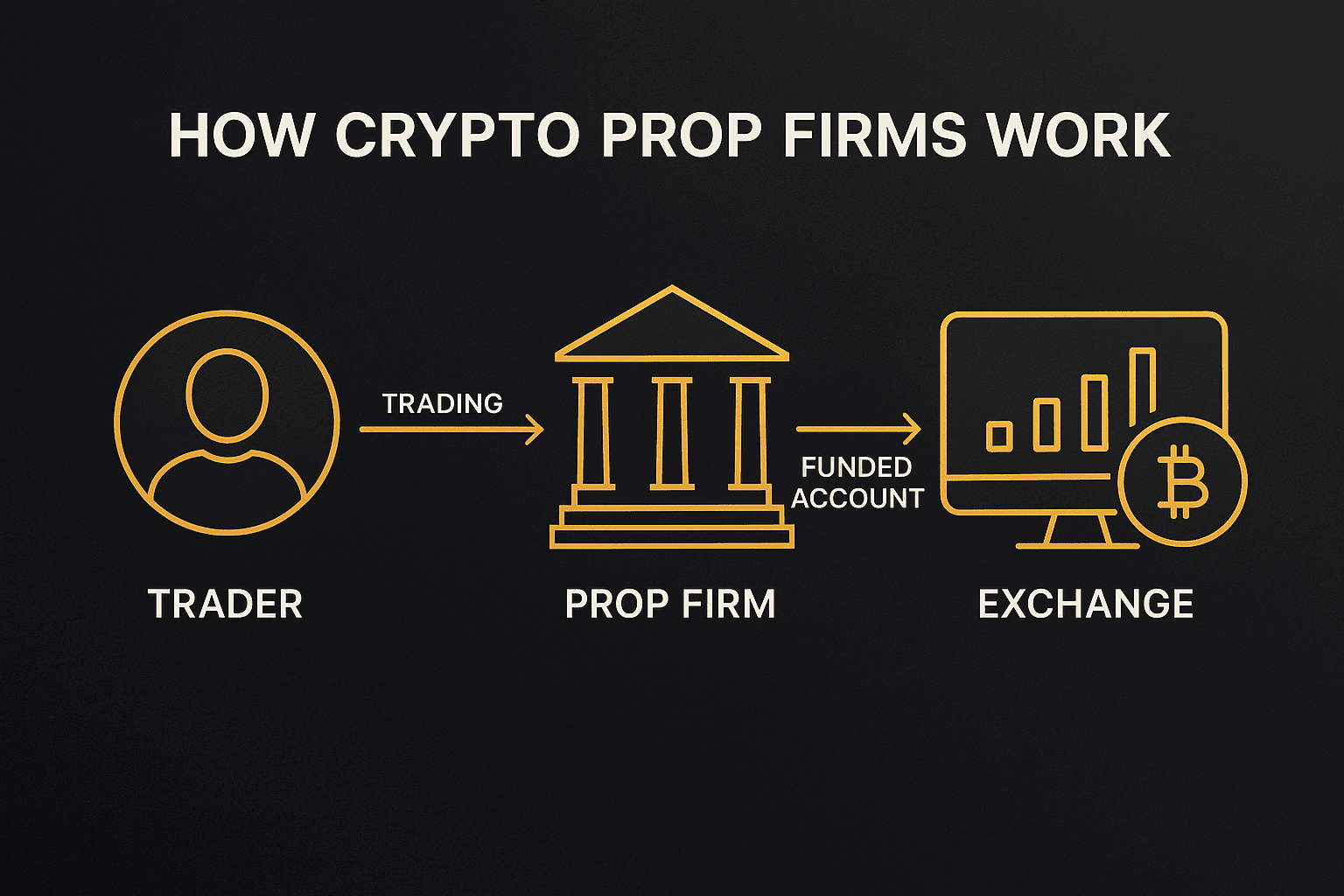
A crypto prop firm is a company that funds traders with a “crypto funded account” after they pass an evaluation. You pay a fee, trade by the firm’s rules, and keep a percentage of the profits. It’s the fastest way to access larger capital for bitcoin prop trading without depositing your own full account size. If you’re brand new, start with What is a prop firm? and come back here for the crypto-specific details.
In 2026, most crypto prop firms resemble futures prop firms in structure — but the trading environment is different. Crypto is 24/7, more volatile, and often uses exchange-native leverage. That changes how you should approach rules, risk, and payouts.
Step 1: Choose an Evaluation Model
Crypto prop firms typically offer 1-phase, 2-phase, or 3-phase evaluations. The more phases, the lower the fee — but the longer the path to funding.
- 1-phase: Fastest route. Higher fee, fewer checkpoints.
- 2-phase: Most common balance of price and difficulty.
- 3-phase: Cheapest fee but strict time/consistency expectations.
For a deeper walkthrough, read How prop evaluations work.
Step 2: Trade on a Real Exchange (or a Sim)
The biggest difference in crypto props is execution. Many firms route trades to real exchanges like Bybit, OKX, or Kraken. Others use simulated feeds that mirror exchange data. Real execution typically means tighter spreads and better legitimacy — but also stricter rule enforcement.
Before buying a challenge, confirm the exchange, available pairs, and whether the account uses spot or derivatives. If the firm is vague on exchange details, consider it a warning sign.
Step 3: Manage Leverage and Risk Rules
Crypto funded accounts often provide leverage between 1:5 and 1:100 depending on the exchange and instrument. That leverage is powerful — and dangerous — because crypto price swings can trigger drawdown violations quickly.
Most firms enforce two key limits: a daily loss limit and a max drawdown. You should understand how those are calculated before trading. If you’re unsure, read Drawdown explained.
Step 4: Pass the Challenge and Get Funded
Each phase has a profit target (often 6–10%) with fixed loss limits. When you hit the target without breaking rules, you move to the next phase or receive your funded account. Some firms also require a minimum number of trading days, which prevents one lucky trade from passing the evaluation.
Step 5: Withdraw Profits
Crypto prop firms usually pay in USDT or USDC. First payouts may require KYC verification. After that, payout cycles range from daily to monthly depending on the firm and account tier. Fastest firms promise 24-hour processing, but expect longer timelines on your first withdrawal.
Costs: What You Actually Pay
- Challenge fee: One-time purchase or monthly subscription.
- Reset fee: Some firms charge to restart after a failure.
- Activation fee: Less common in crypto, but still appears at certain firms.
- Exchange fees: Real exchange trading means taker/maker fees apply.
Your goal is to find a firm where the total cost to funding makes sense for your win rate and style. Use crypto prop rankings to compare pricing, or browse all prop firms for alternatives.
Is a Crypto Prop Firm Right for You?
Crypto props can be a powerful way to scale, but they demand discipline. If you already trade crypto consistently, a funded account may help you grow without risking large personal capital. If you’re still learning, focus on your edge first — failing repeated challenges can cost more than a small personal account.
Frequently Asked Questions
Q: Do crypto prop firms use real money?
Some do, some don’t. Firms that integrate directly with exchanges often route trades to real venues, while others simulate orders. Always check the firm’s execution model.
Q: What if I fail the evaluation?
You typically need to repurchase the challenge or pay a reset fee. That’s why rule clarity and fair drawdown limits matter.
Q: Are payouts taxed differently in crypto?
Often yes. Payouts in USDT/USDC can be treated differently by jurisdiction. Track your cost basis and consult a tax professional if needed.
If you want to compare reputable firms and avoid scams, start with our red flags checklist, then explore the best options on the crypto rankings page.